Artis
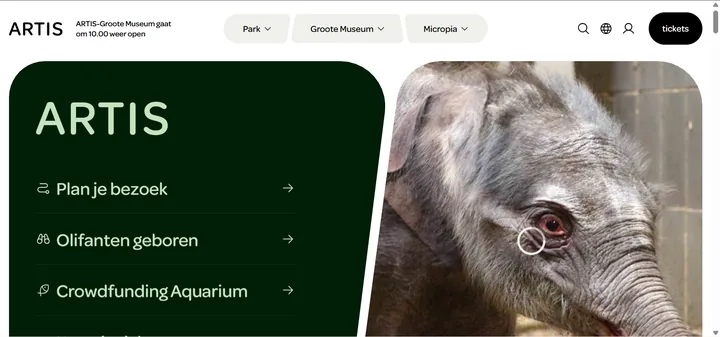
I contributed to the online booking and ticketing system for Artis, the royal zoo in Amsterdam, built on Django.
The problem
A zoo sells entry to a place with a hard physical limit. Unlike a shop, it cannot meet demand by selling more — past a certain number of people inside, the visit itself degrades and the site stops working as somewhere you would want to be. Timed-entry ticketing exists to spread arrivals across a day so that capacity is used fully without ever being exceeded.
Constraints
Demand is extremely uneven. A wet Tuesday in February and the first warm Sunday of spring are different businesses, and the system has to behave on both. Peaks are not gradual either — holidays and weekends concentrate booking traffic into short windows.
Availability also has to be true at the moment it is shown. A slot that appears open and turns out to be full at the payment step is worse than one that never appeared, because the visitor has already committed to a plan.
What I built
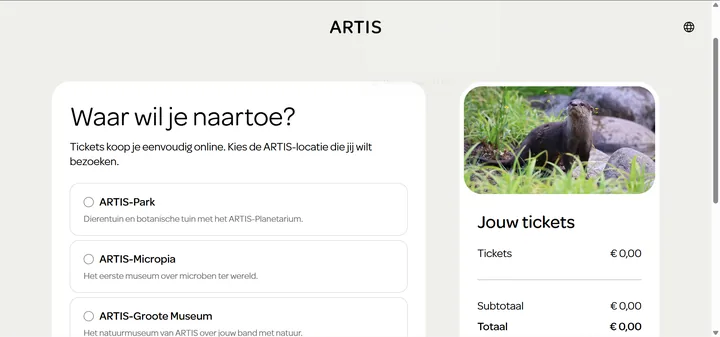
The platform covers the full visitor journey: choosing a time slot, buying the ticket, receiving a QR-coded e-ticket, and being admitted at the gate against a daily capacity limit that the system enforces rather than merely reports.
Two parts carry the peak. Real-time availability updates, so what a visitor sees reflects what is actually left rather than a cached count from a minute ago. And queue management, so a surge is absorbed in an orderly way instead of being resolved by whoever’s request happens to arrive first.
Outcome
A ticketing system that holds up on the days that matter — the ones where everyone decides to visit at once — and that turns a fixed physical capacity into a schedule the operation can actually run against.
For a booking system approached from the opposite direction — embedded into someone else’s site rather than owned end to end — see BriqBookings.
PLATFORMWeb
STACKPython, Django
WEBSITEhttps://www.artis.nl