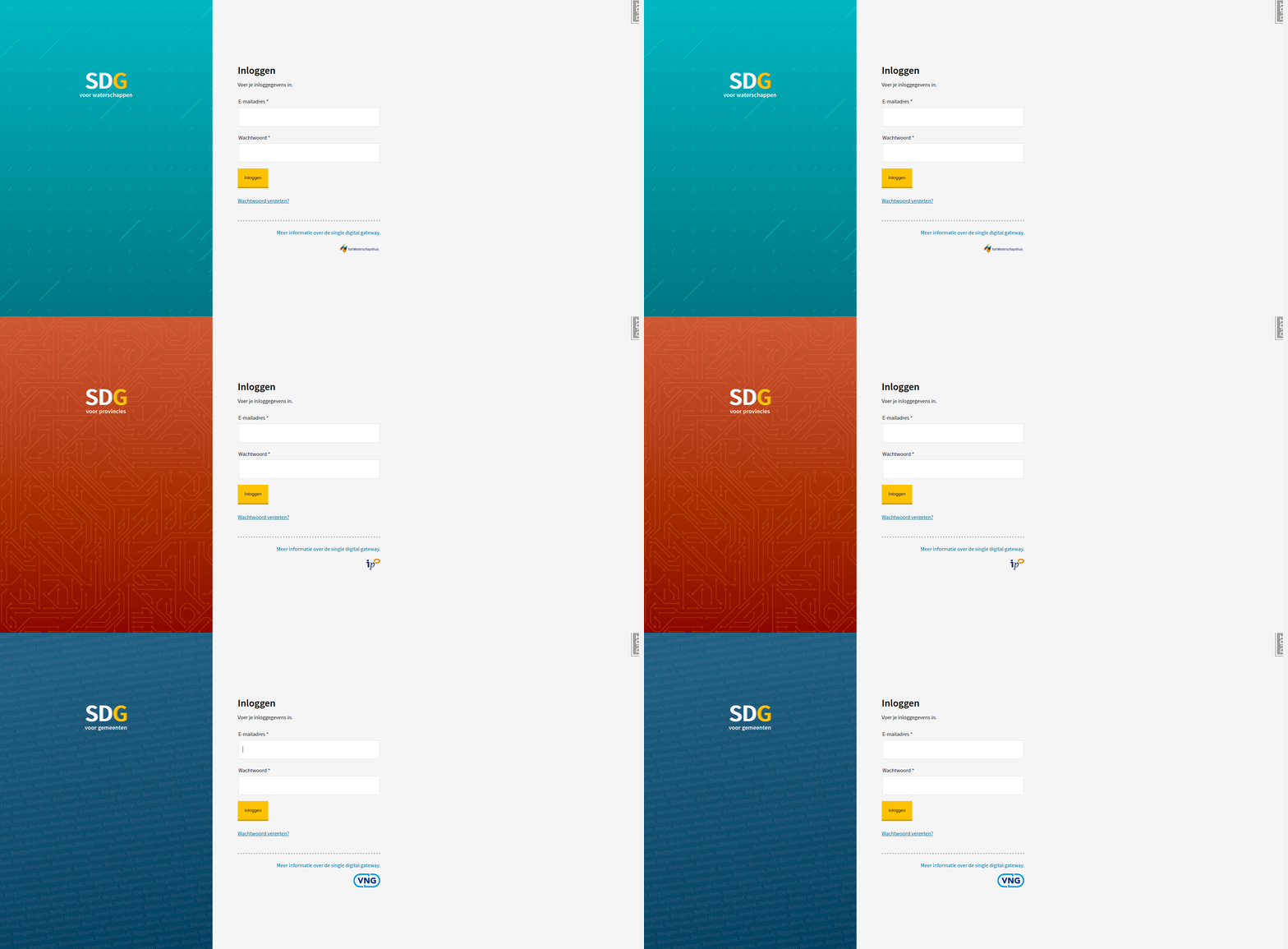
SDG Invoervoorziening
Project lead for the SDG Invoervoorziening, the CMS and API through which Dutch government bodies publish the service information required by the EU Single Digital Gateway.
The problem
The Single Digital Gateway is EU regulation. It requires member states to make information about public services findable, current, and available in a second language, so that a citizen or business from one member state can work out how to do something in another — register a company, apply for a licence, enrol a child in school.
In the Netherlands that obligation lands on every municipality, province and water authority in the country. Each of them holds its own version of the same product descriptions, in its own words, on its own schedule. Meeting the regulation nationally meant getting all of them producing information uniform enough to be aggregated and reused, without asking each one to become a publishing operation.
Constraints
The authors are not content specialists. They are people at a municipality with other jobs, so the tool had to be usable without training and without a style guide nobody would read.
The output could not simply be a website. It had to be machine-readable and reusable downstream, because the point of the gateway is aggregation — the same description surfacing on a national portal, a European one, and the organisation’s own site.
And it is public infrastructure, which long outlives the team that builds it. That argues for boring, well-documented technology over anything clever.
What I built
A CMS and an API, both on Django, developed in the open.

The CMS gives each organisation a structured editor for its own products, working from a national reference text rather than a blank page — so the default is consistency, and local divergence becomes a deliberate act rather than an accident of phrasing. The API exposes the result as structured data with a defined update path, which is what makes a description reusable across portals instead of copied between them.
Django was the right call precisely because it is unremarkable: batteries included for the admin and content modelling, a very large pool of developers who can maintain it, and a governance model that will still exist in ten years. For public infrastructure that is a feature, not a compromise.
Outcome
A single route for Dutch government bodies to publish service information that is uniform enough to aggregate, structured enough to reuse, and open enough to inspect — together with the framework for keeping it current, which is the part that decides whether a project like this still works in five years.
Both the CMS and the API were built on Django, the same framework behind the Artis ticketing platform.
PLATFORMWeb
STACKPython, Django
WEBSITEhttps://vng.nl/projecten/single-digital-gateway
GITHUBhttps://github.com/maykinmedia/sdg-invoervoorziening